

A New Universal Tree of Life and Tarot
This study is not intended to argue with those who are already totally invested in their chosen belief into what is the true meaning of the Tarot cards and their attributes. Some believe that the Tarot cards are esoteric representations of a sacred journey of the soul or an ancient initiation rite, while others may believe it is a picture book of astrology or some other esoteric notions. People will often want to believe whatever suits their prejudices, personal desires, or some childhood fantasies. So, just to be clear, whatever your preferred Tarot deck or interpretation of the cards may be this study probably won’t validate or confirm your beliefs. However, if you are open to new ideas and approaches to the Tree of Life and the Tarot perhaps this study will be of interest to you.
I can also say, with much certainty, that there is absolutely nothing to fear from the Tarot cards in and of themselves. Rest assured that the cards will not harm you in any way by using them, whether it be for fun, education or divination. The Tarot cards do not have any supernatural or demonic powers somehow magically infused into them; they are simply a deck of cards with pictures made out of regular ink and paper.
The history of the Tarot is not very clear at all, and no one really knows what the intended attributes or meaning of the original cards were meant to be. The people who like to make spurious claims about being part of some old esoteric tradition really have very shallow roots at best, and most likely they’re just selling you a pack of lies. It is truly anyone’s guess as to what the actual intended meaning of the original Tarot cards were since there are no records of them. The introduction of the Tarot cards during the 14th century renaissance was but a small part of a much larger influx of new ideals about culture and philosophy that was pouring into Europe at that time. Originally, they were arguably nothing more than a card game.
There are certainly parallel relationships that can be made between the 22 Hebrew letters and the Tarot. They are both based on the same number of 22 major components, as well as the astrological attributes that both of them incorporate into their systems. However, although the 22 Major Arcana of the Tarot deck have been grafted onto the western esoteric traditions approach to the Qabalistic Tree of Life since Eliphas Levi first proposed the idea, there are still many differing opinions as to which Atu should be assigned to what path on the Tree of Life. I wanted to avoid the unprovable claims of original intent or meaning of the Tarot cards, which meant that I needed to reexamine the structure of the Tarot from the ground up. And if I was going to use the Major Arcana of the Tarot deck to represent the 22-paths of the Tree of Life I would also have to reanalyze all the attributes associated with each card before I could even try to apply them appropriately in a new Tree of Life system.
To begin with I looked for patterns and groupings that were present in the deck and then moved on to see how the numerical and astrological attributes would best fit into these patterns and groupings. The first symbols within the Tarot whose cards attributes needed to be resolved were the numbers zero through twenty-one of the Major Arcana. There were two differing opinions about what the number of the Fool card should be, either zero or twenty-two, so I started by analyzing the Fool.
The Fool as the zero card is the most commonly used today and I believe the most suitable. Most notably because the ideal numbers start with zero and the notion of the fool card is the image of a mindless nobody, a vagabond, someone with no social value, a zero. In addition, the very idea of zero was a new numerical notion to the Europeans in the fourteenth century, which was introduced at the very same time that the Jewish merchants, who were already adept at using the Arabic number system, were settling into Prague and Venice, and the first Tarot cards were also published in Europe.
The other Tarot cards where there was a major difference of opinion regarding their number, were the Strength and Justice cards. The dispute was over which one should be assigned to the number eight and which to the number eleven. One school of thought believes that the Strength card should be assigned to the number eight and the Justice card to eleven; while the other school thinks the opposite. Either way, these two cards would first need to be reexamined, and the most harmonious numerical associations determined, before they could be incorporated into this Tree of Life system. I settled on using eight for the Strength card and eleven for the Justice card, mainly because the numerological nature of number eight is strength, which makes it a more appropriate representation of the Strength card. Whereas the Justice cards’ image very clearly represented the zodiac sign of Libra, given its’ image of the scales, and the number eleven was also in the middle of the deck with ten cards on either side, i.e. balance, as well as the equilibrium implied by the two ones of the number 11.
Once the Tarot card number and image associations were determined a pattern emerged; the first ten cards all represented human characteristics, and the remaining twelve cards were more experiential in nature. I think it is very notable that the single digit cards verse the double-digit numbered cards of the Major Arcana have very distinctly different types of central themes in their designs: the first ten cards are ideal numbers that depicted characters, whereas the remaining twelve cards are dual numbers that depict experiences or environments. The first ten cards were very much in line with the astrological characteristics of the Sun and nine planets, and since the twelve remaining cards could also represent the experiences or environments of the twelve zodiac signs very accurately, gave this approach to assigning the attributes a valid justification.
The first ten cards can all represent a particular planetary personality type and, if you were to look at the natures of the planets currently being considered, the natural progression of planets in our solar system is also reflected: The Fool as The Baby (0-Sun), the Magician as The Boy (1-Mercury), the High Priestess as The Girl (2-Venus), the Empress as The Mother (3-Earth), the Emperor as The Father (4-Mars), the Hierophant as The Teacher (5-Jupiter), the Lover as The Mate (6-Saturn), the Charioteer as The Inventor (7-Uranus), the Courageous as The Hero (8-Pluto), and the Hermit as The Wise (9-Neptune). — Pluto is assigned the number 8 because, although it may go a further distance from the sun than the other planets, its’ oblong orbital ring is the eighth ring out from the sun and always has to travel between the orbits of Neptune and Uranus. —
The remaining twelve cards follow a similar pattern of association with the zodiac; they are not personality types but are types of experiences or environments that we may all go through in life. The Wheel of Fortune reminds us that we reap what we sow (10-Taurus), the Justice card implies Balance or Fairness (11-Libra), the Hanged Man is the experience of Sacrifice or Surender (12-Pisces), Death indicates an Ending or Transformation (13-Scorpio), Temperance is the experience of Blending or Tempering (14-Sagittarius), the Devil is the experience of Fear or Restriction (15-Capricorn), the Lightning Struck Tower the environment of War or Upheaval (16-Aries), the Star card is gaining Knowledge or having Aspirations (17-Aquarius), the Moon card as the environment of Ebb and Flow or experiencing the Dangers of the Night (18-Cancer), the Sun card an environment of Growth or experiencing Attainment (19-Leo), Judgement implies Duality or Contrasting environments (20-Gemini), and the World card as the experience of Perfection or Fruition (21-Virgo).
The question of whether or not to include the outer planets Uranus, Neptune and Pluto could also be debated, being how they were discovered centuries after the original Tarot deck was invented. And if preserving the original intent of the Tarot cards was my only concern this would be a valid consideration. However, I was not concerned with the lack of historical knowledge of the three outer planets, since what we now know about these planets can still easily conform with the dynamic characters that exist in the first ten Major Arcana cards. So, I proceeded to see if they still could be incorporated into the deck harmoniously. In fact, they fit so well together that it makes me wonder if these three outer planets may have been somehow known about already, perhaps because of numerical parallels, or that their dynamic influences, although unseen, could have somehow been felt and characterized in other ways, as seen in the classic descriptions of the gods.
The term “as above so below” was an esoteric concept that had been around at least since the Hermetic tradition of the Emerald Tablets of Egypt. This concept could also be applied in reverse, “as below so above”; so that from the observations of the numeric and cyclic patterns on earth, they could assume that there would also be similar influences emanating from some unseen planets above us. The Pythagorean and Platonian ideas that the study of numbers allowed us to see beyond our limited eyesight, and their belief in cosmic harmony, inherent in the music of the spheres’ philosophy, suggested that there may be more planets in our solar system than could be seen with our naked eyes.
There are two major divisions in the Tarot deck, the Major and the Minor Arcana. The Major Arcana is reflective of the Solar system and the Zodiac, whereas the Minor Arcana is reflective of the four elements and the Lunar cycle. They both have distinctly different patterns and cycles that can be observed and experienced over time. I’m proposing in this Tarot system that the Major Arcana is a representation of ten different character types, corresponding to the ten major planetary dynamics, and the twelve zodiac experiences or environments that we go through in our life. In this system the themes of the Major Arcana relate to our larger social situations, considerations and conditions of life. Whereas the Minor Arcana represents our mundane concerns and experiences we have as the Moon cycles through the signs each month.
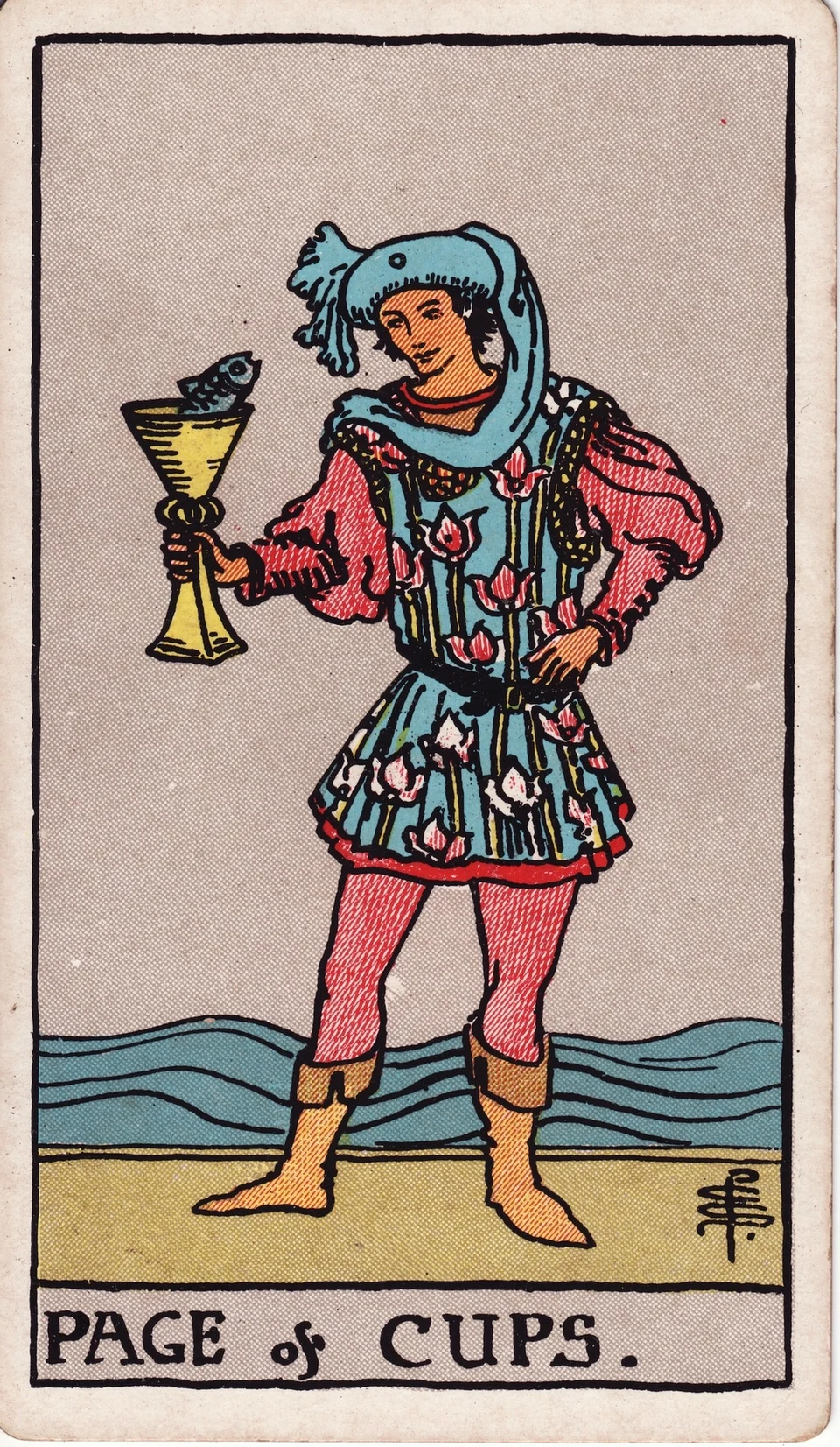
The Minor Arcana is divided into four elemental categories: The two male elements are Fire and Air, and the two female elements are Earth and Water. The Minor Arcana suites can be broken down again into the ten number cards and the four court cards. The 56-cards allows them to be used to represent the lunar cycle of 28 days, if each day cycle is divided into two parts, night and light time, wherein the male suites can represent the light portion of the cycle and the female suites can represent the night portion of the cycle.
The Minor Arcana, like the Moon cycle, has rhythms and behaviors that are distinctly different from the rhythms and behaviors of the Major Arcana and the Solar cycle. The Minor Arcana addresses the mundane routines and rhythms of life that occupy most of our day-to-day concerns, but don’t affect our lives as profoundly as the larger social considerations of the Major Arcana. Mundane activities like counting down the days of your menstrual cycle, simply planning for your next payday, or your days off, all would fall under the sub-lunar influences of the Minor Arcana.
In the common playing card deck, which the Minor Arcana is based on, the 52-cards can correspond to the 52 weeks in a year; and since there are only three court cards, they can correspond to the three modalities: cardinal, fixed and mutable. The thirteen cards per suite can also reflect the thirteen full moons in a year.
Although the Tarot can certainly be used for divination, true diviners can use almost anything to foretell the future; things like sticks, stones, tea leaves, and even common playing cards are just some of the many things used by fortune tellers. Antoine Court de Gébelin, a French archaeologist, published a book in the late 18th century associating the Tarot with fortune telling and ancient esoteric teachings; however, the Gypsies have used the 52 common playing cards, among many other things, for divination purposes long before the 18th century. Unfortunately, all attempts to give any credit to the Romani peoples’ contributions to the esoteric traditions of Europe are often rudely rejected or ignored, much like everything else they have contributed to European music and art history.
The Tarot Show
The Ten Actors & Twelve Scenes of the Major Arcana
| 0 Sun  The Fool | 1 Mercury  The Magician | 2 Venus  The High Priestess | 3 Earth  The Empress | 4 Mars  The Emperor | 5 Jupiter  The Hierophant | 6 Saturn  The Lover | 7 Uranus  The Charioteer | 8 Pluto  The Courageous | 9 Neptune  The Wise |
| Fire Signs | Water Signs | Air Signs | Earth Signs | |
| ACT I The Cardinal Signs | 16 Aries  The Lightning Struck Tower | 18 Cancer  The Moon | 11 Libra  The Scales of Justice | 15 Capricorn  The Devil |
| ACT II The Fixed Signs | 19 Leo  The Sun | 13 Scorpio  The Death | 17 Aquarius  The Star | 10 Taurus  The Wheel of Fortune |
| ACT III The Mutable Signs | 14 Sagittarius  The Temperance | 12 Pisces  The Hanged Man | 20 Gemini  The Judgement | 21 Virgo  The World |
The 28 Mansions of the Moon & the 56 Minor Arcana
There are approximately 28 days in a lunar cycle and 28-cards per elemental gender in the Minor Arcana:
The 28-night times of the 28-day lunar cycle can be represented by the female water and earth suites of 14-Cup & 14-Disk cards, and the 28-daylight times of the 28-day lunar cycle can be represented by the male fire and air suites, 14-Sword & 14-Wand cards. The Minor Arcana is identical to the common play cards, only with the addition of the Page to the court cards.
The 52-cards of the common playing card deck can represent the 52 weeks in a year. The 52-card deck predates the Tarot, and its’ 13-card suites reflect the triune nature of the elements they represent better than the Minor Arcana, because the 3 court cards can each represent one of the 3 elemental modalities: Cardinal, Fixed, or Mutable. For example, if the King of Hearts card represented the cardinal modality of water, then it would represent the sign of Cancer; in turn, the Queen of Hearts could then represent the Fixed sign of Scorpio, and the Jack of Hearts could represent the Mutable sign of Pisces.
| FIRE Blades Spades Swords | WATER Vessels Hearts Cups | AIR Staffs Clubs Wands | EARTH Disks Diamonds Pentacles |
| Male Element This suite represents the element of fire, which reflects the nature of heat, transformation, and control by force. Swords are forged in the fire. Fire can either keep us warm or burn down our house. | Female Element This suite represents the element of water, which reflects the nature of fluidity, emotions and the power of adaptability. Cups are containers for liquids like water which can hydrate us or drown us. | Male Element This suite represents the element of air, which reflects the nature of oxygen producing plants, photosynthesis, and the power of wind. Staffs are made from trees which can give us oxygen or blow us away. | Female Element This suite represents the element of earth, which reflects the nature of food, property and the physical power of possessions. Disks are made from the earth which can provide us food or smoother us in dirt. |
 |  |  |  |
 |  |  |  |
 |  |  |  |
 |  |  |  |
 |  |  |  |
 |  |  |  |
 |  |  |  |
 |  |  |  |
 |  |  |  |
 |  |  |  |
 |  |  |  |
 |  |  |  |
 |  |  |  |
 |  |  |  |