
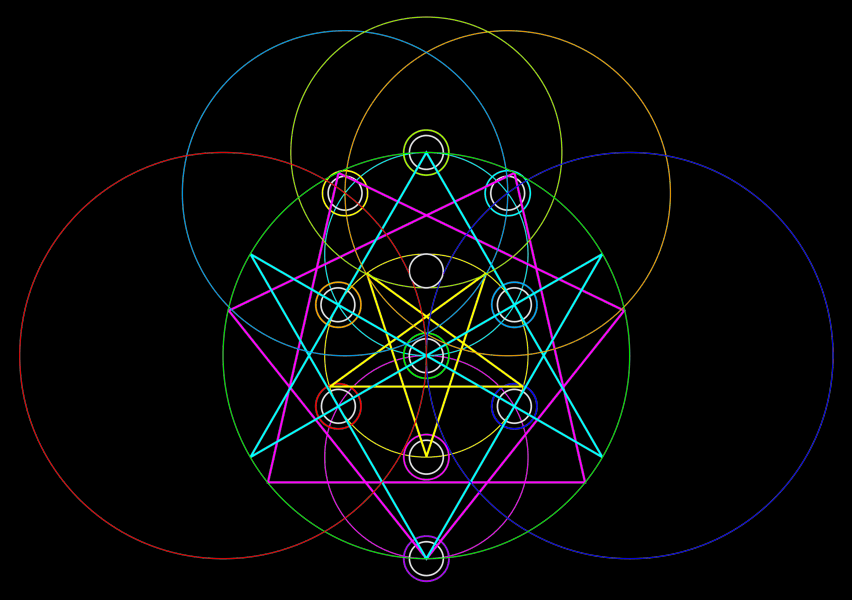
The Star structures within this Tree of Life
The geometrical star structures in this Tree of Life model can be drawn using only a straightedge and compass. The study of how to divide a line into thirds and a circle into sevenths using only a straight edge and compass was what first got me interested in the Tree of Life. I knew that it was impossible to perfectly divide a line into thirds or a circle into sevenths by only using a straightedge and compass; but non the less, I wanted to see how close I could get and what else I could discover in the process of trying. I was motivated to do this exercise because I heard this was one of the practices that the Pythagoreans made their students go through for years in order to help them better understand the mysteries of geometry and numbers.
By doing this exercise I became aware that achieving perfection wasn’t necessary to achieve a practical solution to these otherwise unsolvable problems. By exploring different approaches to these particular challenges, it also revealed many ways of creating several different geometrical forms and seeing relationships between that I wouldn’t have otherwise seen.
I wasn’t intending to develop another Tree of Life model when I first started this geometrical exercise, however this form that resembled the Tree of Life forms made by the Kabbalist kept emerging out of the process. This prompted me to delve deeper into the notions being put forth in other Tree of Life designs around the world and throughout history. All these different cultural approaches, although varied in form, shared a common appreciation of the intrinsic nature of numbers and the value of harmonious geometrical structures. This led me to research even more esoteric topics from around the world relating to geometry, numbers and light that have continued to fascinate me over the years.